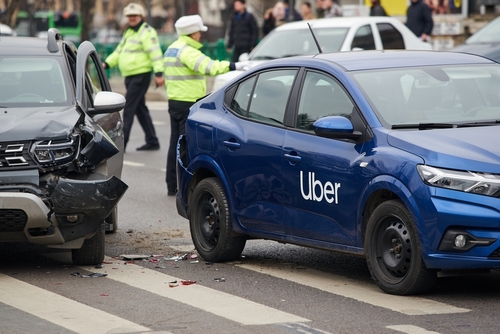
Tourism, nightlife, and airport traffic converge in Fort Lauderdale. Jet-lagged visitors leaving FLL open the Uber or Lyft app the instant they reach the arrivals curb. Spring-break groups stream out of clubs on A1A long after public transit shuts down. Local commuters, attracted by low barriers to entry, toggle between DoorDash deliveries and rideshare pick-ups to boost income, sometimes working beyond fatigue limits. It’s clear why collision rates keep rising.
Our top-rated Fort Lauderdale rideshare-accident attorney has litigated claims involving distracted drivers, faulty GPS instructions, and negligent hiring by transportation-network companies. The goal is simple: translate the patchwork of PIP, contingent coverage, and $1 million third-party policies into a single, full-value recovery that pays today’s medical bills and tomorrow’s future-care needs.
How Florida Classifies an Uber or Lyft Crash
Florida treats every rideshare collision through the lens of when it happened in the driver’s app cycle. That single time-stamp controls which insurance policy pays first, how high the limits run, and whether a medical provider gets a check or a collections notice. The controlling authority is Florida Statutes § 627.748, which—together with Uber and Lyft’s own certificates of insurance—splits a driver’s shift into three legally distinct windows.
- “App On—No Passenger Accepted.”
The driver has the rideshare app open and is waiting for a ping. During this idle period the law mandates at least $50,000 in bodily-injury coverage per person, $100,000 per crash, and $25,000 for property damage. Because personal auto carriers almost always deny claims the moment they see app activity, Uber and Lyft fund contingent policies that float on top of whatever personal coverage survives the exclusion clause. If the claimant’s medical bills stop at diagnostics and physical therapy, this window often supplies enough coverage—provided counsel proves the driver was “available” but had not yet accepted a fare.
- “En-Route to Pick-Up.”
The instant the driver taps “accept,” Florida law triggers a $1 million third-party liability layer. That policy stays primary even if the driver still carries robust personal limits, and it pays on behalf of pedestrians, cyclists, other motorists, and the soon-to-be passenger. Disputes here center on seconds: insurers may argue the driver accepted the ride after the impact or canceled before police arrived. Skilled rideshare accident attorneys send preservation letters to Uber or Lyft within hours, demanding trip-status logs, GPS telemetry, and phone screenshots so defense counsel cannot rewrite the timeline.
- “Passenger On Board.”
Once the rider enters and the trip toggles to “in progress,” the same $1 million policy rolls forward until the passenger exits and the driver taps “end.” Because the rider is an insured guest under the policy, Florida’s no-fault Personal-Injury Protection becomes secondary, reserving its modest $10,000 limit for copays or immediate wage loss. If another motorist is also at fault, the rideshare insurer and the third-party carrier must coordinate coverage, but the rideshare layer cannot escape primary responsibility.
Crashes that occur outside these three windows—for example, a driver commuting home with the app off—default to the personal auto policy, which may carry the state minimum of $10,000 and leave hospitals chasing balances. Properly classifying the collision is, therefore, the financial hinge of the case. Because rideshare companies purge certain data within days, time is the true enemy.
Typical Fact Patterns and the Evidence Needed
A rideshare claim almost always features at least two insurers and sometimes four: the rideshare carrier, the driver’s personal insurer, another motorist’s insurer, and an excess or umbrella layer. Each will deny first, citing ambiguous status time stamps, independent-contractor arguments, or comparative fault. Netska Law Group responds by subpoenaing:
- Digital breadcrumbs—GPS pings every few seconds, ride-accept logs, and “trip ended” confirmations stored on company servers;
- Vehicle event-data recorder files—speed, braking force, seat-belt status;
- Cell-phone usage logs—to prove the driver read a ping or navigated the app instead of the road;
- Corporate hiring and safety-violation records—background-check gaps and prior deactivation notices that show negligent retention.
These data sets let jurors—and claims adjusters—see a minute-by-minute story instead of dueling recollections.
Common Injuries in Florida Rideshare Collisions
Rideshare crashes in Fort Lauderdale share certain mechanical hallmarks that shape the injury pattern seen in emergency rooms and orthopedic clinics across Broward County. Because Uber and Lyft trips typically occur on busy urban streets, impacts often strike the vehicle’s flanks rather than the front or rear. Side-impact crashes transfer force through the thin door panel and into the torso of an unsuspecting passenger, who is usually holding a phone or backpack instead of bracing a steering wheel.
The result is an acute cervical sprain—or “whiplash”—as the head snaps toward the window, followed by shoulder injuries when the upper arm slams the B-pillar. Orthopedists regularly diagnose torn rotator cuffs and labrum lesions that require arthroscopic repair weeks after the initial ER visit, once swelling subsides and range-of-motion deficits emerge.
Lower-body trauma is equally common. The intrusion of the floor pan or side rail can trap feet and shins, fracturing the tibia or fibula and sometimes crushing the ankle mortise. These fractures often demand open-reduction internal fixation with plates, screws, or intramedullary rods.
Even when the bones knit well, prolonged immobilization leads to calf atrophy and altered gait mechanics that complicate a return to work for rideshare passengers employed in retail, hospitality, or any occupation that requires standing. Knee injuries also appear with regularity: meniscal tears, anterior cruciate ligament sprains, and patellar dislocations caused by the abrupt twisting motion as the body rotates under lateral G-force while the lower legs remain pinned.
Rear-seat riders face an added risk known as “submarining.” In a sudden stop, a lap belt without a properly adjusted shoulder harness can allow the body to slide forward, forcing the belt across the abdomen rather than the pelvis. Submarining precipitates hollow-organ trauma—splenic lacerations, liver contusions, and small-bowel perforations—that may not present until hours later, when internal bleeding produces referred shoulder pain or a rigid abdomen. Diagnostic delays increase morbidity, making it vital for any rideshare passenger who feels abdominal discomfort or lightheadedness after a collision to seek repeat evaluation even if they were discharged from the ER with negative imaging.
Overlaying the orthopedic and visceral damage is a layer of neurological and psychological harm. Concussions arise from rapid deceleration, and diffuse axonal injuries can impair concentration, mood regulation, and short-term memory. Because rideshare passengers surrender control the moment they enter the vehicle, post-collision anxiety rates exceed those seen in two-driver fender-benders.
Insomnia, intrusive flashbacks, and avoidance of traffic corridors become part of daily life, requiring cognitive-behavioral therapy or pharmacologic intervention. Florida law recognizes these emotional injuries as compensable when linked to a physical impact, but insurers routinely minimize them unless treating psychologists and neuro-psychologists document the full scope.
Comprehensive medical and psychological documentation is therefore indispensable. Early MRI scans, orthopedic follow-ups, neuro-cognitive testing, and mental-health records jointly illustrate the ripple effect of a rideshare crash on mobility, employability, and quality of life. When presented cohesively, this evidence supports a damages demand that covers immediate treatment, future surgeries, vocational retraining, and ongoing therapy—ensuring that injured Uber and Lyft passengers secure compensation commensurate with the multifaceted injuries they endure.
Fort Lauderdale Rideshare Accident Lawyer Who Gets the Legal Work Done
Uber/Lyft crashes hinge on app status and expiring data—not guesswork. Our job is to turn those moving parts into money you can actually use.
- Lock the coverage. Florida splits rideshare time into three windows (app on/awaiting, en route, passenger onboard). Each triggers different insurance—up to $1,000,000 when a ride is accepted or in progress. We send same-day preservation letters to Uber/Lyft and the driver, then subpoena trip logs, GPS telemetry, and in-app timestamps so the right policy is on the hook.
- Force insurers to pay in the right order. We map PIP, the driver’s personal auto (often excluded for app use), the rideshare layers, any employer/commercial or umbrella policies, and your UM/UIM. We tender to every carrier, demand written coverage positions, and set bad-faith deadlines when a company slow-walks or misreads status.
- Clear Florida’s legal thresholds. To recover pain and suffering, Florida requires permanency (or significant loss of function/scarring). We coordinate treating-physician narratives, targeted imaging, and functional testing so non-economic damages are legally unlocked—not argued.
- Kill blame-shifting. Since 2023, you recover nothing if you’re over 50% at fault. Attorneys counter “no seat belt,” “darted out,” or “low-speed” defenses with seat-belt forensics, light/visibility measurements, phone-use timelines, and EDR data. If a third-party driver caused the crash, we keep the $1M rideshare layer at the table for passengers.
- Make causation courtroom-tight. We align mechanisms (side intrusion, belt loading, head strike) with diagnosis (labrum/meniscus tear, herniated disc, mTBI) using physician opinions and radiology—evidence insurance software can’t dismiss.
- Value forward, not just backward. Beyond today’s bills, we price future care (procedures, meds, therapy, equipment) and lost earning capacity with life-care and vocational experts, then present a demand every dollar of which is tied to records or sworn opinions.
- Litigate when needed. We compel production, depose the driver and company reps, seek sanctions/adverse inferences for lost data, and walk into mediation with trial-ready visuals and models—so committees can approve full value.
Time is critical: servers overwrite fast, and PIP requires treatment within 14 days.
Call Now Before Any Evidence Disappears
Phones reset, apps update, and rideshare servers cycle data every few weeks. Florida’s two-year clock will not pause while you debate your options. If you were hurt as a passenger, pedestrian, cyclist, or occupant of another vehicle in a South Florida rideshare crash, call (954) 836-7530 or complete our secure contact form today. Netska Law Group will map every insurance layer, preserve every time stamp, and pursue the full compensation Florida law permits.
Disclaimer: This page provides general information and does not create an attorney-client relationship. Legal advice turns on specific facts and governing law.